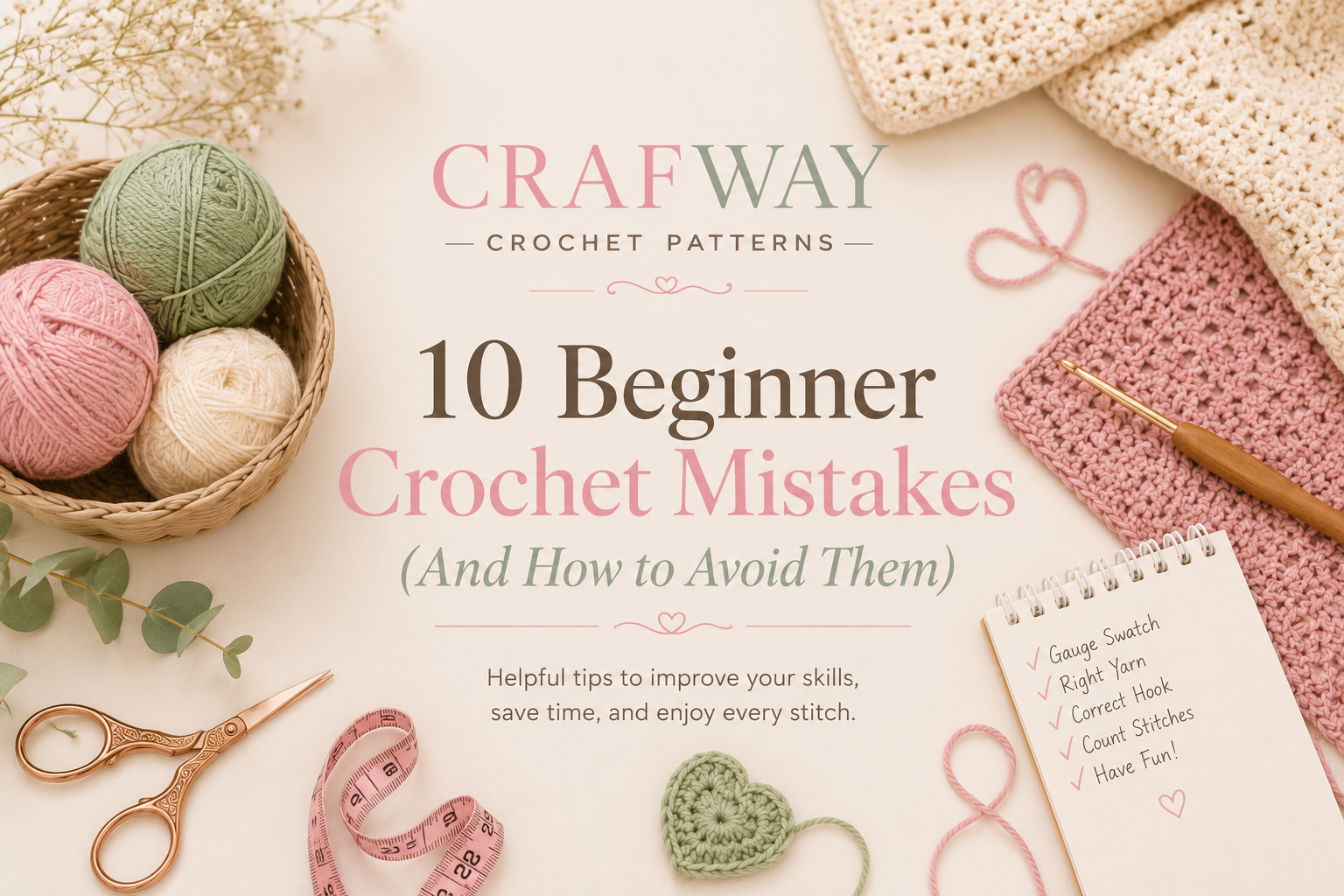
Crochet is one of the most rewarding hobbies you can learn. With just a hook, a ball of yarn, and a little patience, you can create beautiful blankets, stylish garments, adorable amigurumi, and thoughtful handmade gifts. However, every crocheter—whether beginner or experienced—has made mistakes along the way.
The good news is that mistakes are part of the learning process. In fact, understanding what commonly goes wrong can help you improve faster, save time, and enjoy crocheting even more.
In this guide, we’ll explore the ten most common crochet mistakes beginners make and provide practical solutions to help you avoid them. Whether you’re just starting your first project or looking to refine your skills, these tips will help you crochet with greater confidence and achieve professional-looking results.
Why Beginners Make Crochet Mistakes
Learning crochet is similar to learning a new language. At first, terms like “chain,” “single crochet,” “gauge,” and “increase” may seem confusing. Every project introduces new techniques, and it takes practice to develop consistent tension and recognize stitch patterns.
Fortunately, every completed project improves your skills. The more you crochet, the easier it becomes to identify mistakes before they affect the final result.
Remember: even professional crochet designers once struggled with their first stitches.
Mistake #1: Skipping the Gauge Swatch
One of the most common beginner mistakes is ignoring the gauge swatch.
Many crocheters are excited to begin their project and assume skipping this step will save time. Unfortunately, it often has the opposite effect.
Gauge measures how many stitches and rows fit within a specific area, usually 4 inches (10 cm). Every crocheter has a unique tension. Even when using the same yarn and hook as the pattern recommends, your finished size may differ.
This is especially important when making:
- Sweaters
- Cardigans
- Dresses
- Hats
- Baby clothing
How to Avoid It
Before starting your project:
- Crochet the recommended gauge swatch.
- Measure it carefully.
- Adjust your hook size if necessary.
- Only begin the project once your gauge matches the pattern.
Taking fifteen minutes now can save several hours later.
Mistake #2: Using the Wrong Yarn
Not all yarn is the same.
Different fibers, weights, and textures behave differently. Beginners often substitute yarn simply because they like the color, without considering how it affects the finished project.
For example:
- Thick yarn makes garments larger.
- Thin yarn creates smaller pieces.
- Fuzzy yarn hides stitches.
- Cotton has less stretch than wool.
How to Avoid It
Whenever possible:
- Follow the recommended yarn weight.
- Match the fiber type.
- Compare yarn labels.
- Check yardage before purchasing.
If you substitute yarn, make another gauge swatch.
Mistake #3: Choosing the Wrong Hook Size
The crochet hook is just as important as the yarn.
Using a hook that’s too small creates tight, stiff fabric.
Using one that’s too large results in loose stitches and changes the project’s size.
Many beginners assume bigger hooks make crocheting easier, but the pattern has already been designed with a specific hook size in mind.
Tips
Invest in a quality set of ergonomic hooks.
They reduce hand fatigue and make longer crochet sessions more comfortable.
Mistake #4: Losing Count of Your Stitches
Crochet patterns depend on accurate stitch counts.
Missing just one stitch can gradually distort the entire project.
Common causes include:
- Skipping the last stitch.
- Missing the first stitch.
- Forgetting increases.
- Adding extra stitches accidentally.
How to Avoid It
Count your stitches regularly.
Use stitch markers to identify:
- Beginning of rounds
- First stitch
- Pattern repeats
- Important shaping points
Counting every row may feel repetitive, but it prevents major problems later.
Mistake #5: Not Reading the Entire Pattern First
Many beginners start crocheting immediately after reading Row One.
This often leads to confusion halfway through the project.
Professional crochet patterns usually include valuable information at the beginning, such as:
- Materials
- Special stitches
- Size information
- Construction notes
- Finishing instructions
Solution
Read the entire pattern before picking up your hook.
Understanding the project’s construction makes the instructions much easier to follow.
Mistake #6: Crocheting Too Tight
Tight stitches are extremely common among beginners.
Although neat stitches look attractive, excessive tension creates problems:
- Difficulty inserting the hook
- Hand fatigue
- Smaller finished projects
- Stiff fabric
- Uneven texture
Improve Your Tension
Practice relaxing your grip.
Hold the yarn comfortably rather than tightly.
Your stitches should move smoothly along the hook.
Consistent tension is more important than tight tension.
Mistake #7: Ignoring Stitch Markers
Some beginners believe stitch markers are only useful for advanced projects.
In reality, they are one of the most valuable crochet tools available.
They help identify:
- Beginning of rounds
- Pattern repeats
- Increase locations
- Decrease points
- Important shaping sections
Using stitch markers significantly reduces mistakes.
Mistake #8: Forgetting to Count Rows
Stitch counts aren’t the only numbers that matter.
Many patterns rely on precise row counts for shaping.
Examples include:
- Sweater sleeves
- Blanket borders
- Toy bodies
- Bags
Missing several rows may completely change the project’s proportions.
Helpful Tip
Use:
- Row counters
- Sticky notes
- Mobile apps
- Notebook tracking
Keeping track saves time and frustration.
Mistake #9: Rushing the Finishing Process
Many crocheters slow down during the project but rush through the finishing steps because they’re excited to see the completed item.
Unfortunately, finishing is what transforms handmade into professional.
Important finishing techniques include:
- Weaving in yarn ends securely.
- Blocking the finished piece.
- Sewing seams neatly.
- Attaching buttons carefully.
- Adding labels if desired.
Beautiful finishing dramatically improves the final appearance.
Mistake #10: Comparing Yourself to Others
Social media showcases incredible crochet projects.
It’s easy to compare your work with experienced designers who have spent years perfecting their craft.
Remember:
Every expert crocheter once made uneven stitches.
Every designer once struggled with reading patterns.
Every beautiful blanket began with a single chain.
Progress matters far more than perfection.
Celebrate every completed project because each one teaches valuable skills.
Essential Crochet Tools Every Beginner Needs
Fortunately, crochet doesn’t require expensive equipment.
A basic toolkit includes:
Crochet Hooks
Start with a few common sizes suitable for medium-weight yarn.
Yarn
Choose smooth, light-colored yarn that makes stitches easier to see.
Stitch Markers
Inexpensive yet incredibly useful.
Yarn Needle
Essential for weaving in ends.
Small Scissors
Sharp embroidery scissors work perfectly.
Measuring Tape
Necessary for garments and larger projects.
Project Bag
Keeps supplies organized wherever you crochet.
How to Read Crochet Patterns with Confidence
Learning pattern terminology may seem intimidating at first.
Most patterns contain:
- Materials list
- Skill level
- Gauge
- Stitch abbreviations
- Written instructions
- Stitch counts
- Assembly notes
Common abbreviations include:
- ch – Chain
- sc – Single Crochet
- dc – Double Crochet
- hdc – Half Double Crochet
- sl st – Slip Stitch
- inc – Increase
- dec – Decrease
- rep – Repeat
Most designers include an abbreviation key at the beginning of the pattern.
Practice Makes Progress
Like any craft, crochet improves through repetition.
Try making:
- Dishcloths
- Coasters
- Scarves
- Granny squares
- Hats
These smaller projects build confidence while teaching essential techniques.
After mastering the basics, you’ll feel comfortable creating garments, bags, blankets, and decorative home accessories.
Tips for Choosing Your First Crochet Pattern
Not every beautiful project is beginner-friendly.
Look for patterns labeled:
- Beginner
- Easy
- Step-by-Step
- Beginner Friendly
Projects with clear photographs and detailed explanations make learning much easier.
Digital PDF patterns often include printable instructions and lifetime access, making them an excellent choice for new crocheters.
The Joy of Handmade Crochet
Crochet is more than a hobby—it’s a creative outlet that encourages mindfulness, patience, and self-expression.
Each completed project represents hours of learning, practice, and creativity.
Whether you’re making a cozy blanket for your home, a handmade gift for a loved one, or your very first wearable garment, every stitch contributes to something meaningful.
There’s no “perfect” crocheter. There are only makers who continue learning, experimenting, and enjoying the process.
Final Thoughts
Every crocheter makes mistakes, especially in the beginning. The key is not to avoid mistakes entirely but to learn from them. By understanding common pitfalls—such as skipping the gauge swatch, using the wrong yarn, or forgetting to count stitches—you’ll build better habits and create projects you’re proud of.
Crochet is a journey of creativity, patience, and continuous improvement. Each new pattern introduces fresh techniques and exciting opportunities to grow your skills. With practice, confidence comes naturally, and projects that once seemed challenging become enjoyable and rewarding.
At CRAFWAY, we’re passionate about helping makers of every skill level enjoy the art of crochet. Our carefully crafted PDF crochet patterns feature clear instructions, modern designs, and detailed guidance so you can spend less time worrying about mistakes and more time creating beautiful handmade pieces. Explore our growing collection of crochet patterns and discover how enjoyable your next project can be.