Crochet is one of the most enjoyable and rewarding crafts you can learn. With a simple crochet hook, quality yarn, and a well-written pattern, you can create everything from cozy blankets and stylish clothing to adorable amigurumi and elegant home décor. However, one of the biggest reasons beginners become frustrated isn’t because crochet is difficult—it’s because they start with the wrong pattern.
Choosing a crochet pattern that matches your experience level can make the difference between a relaxing, enjoyable project and one that feels overwhelming. Many new crocheters are inspired by beautiful social media photos and immediately attempt advanced garments or intricate lace designs before mastering the basics. While ambition is wonderful, success comes from building your skills step by step.
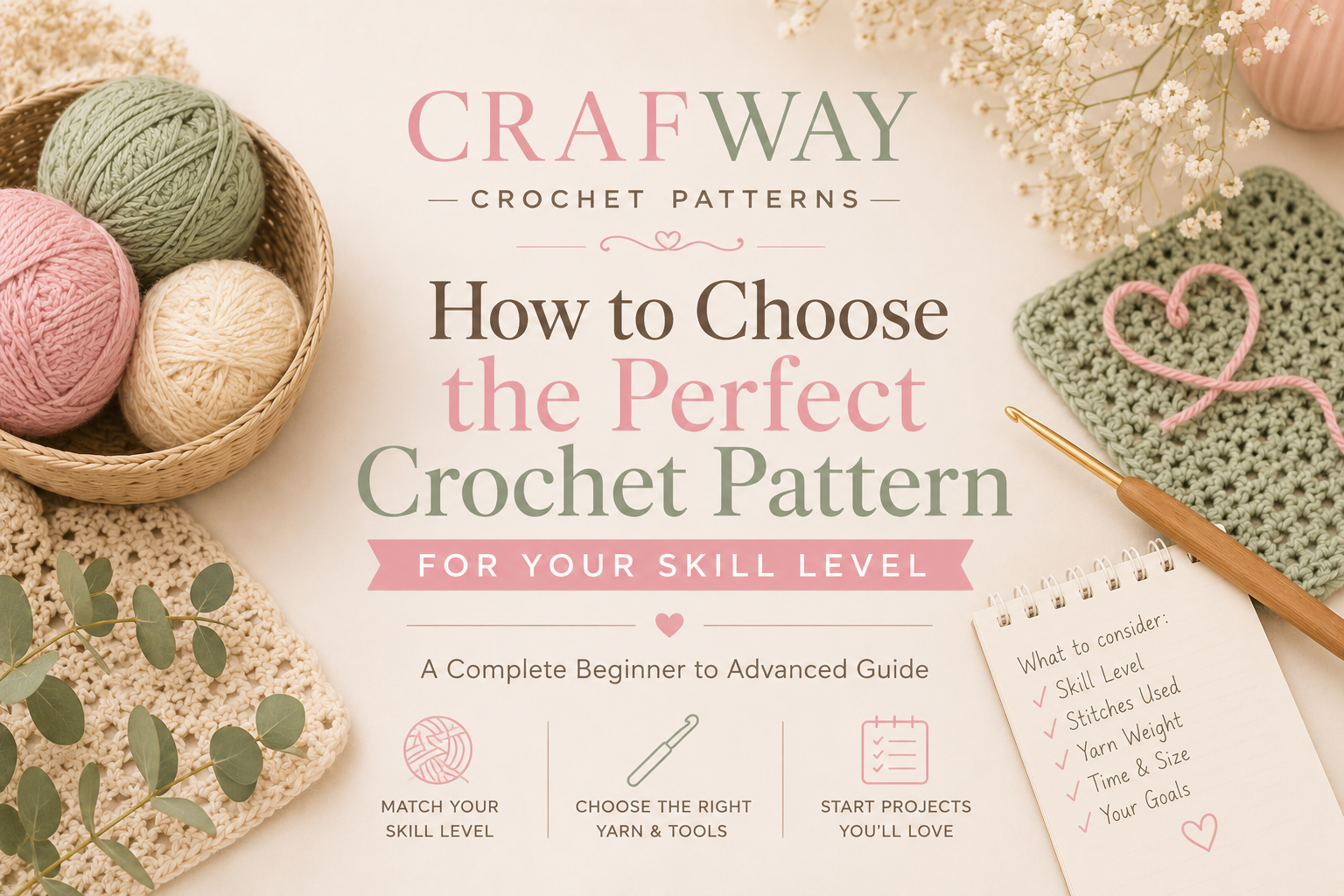
In this guide, we’ll explain how to choose the perfect crochet pattern based on your skill level, understand pattern difficulty ratings, evaluate materials, and build confidence as you progress from beginner to advanced crocheter.
Why Choosing the Right Crochet Pattern Matters
Every crochet project teaches new skills. A pattern should challenge you enough to help you improve without becoming frustrating.
Starting with an overly complicated project often leads to:
- Confusion
- Lost motivation
- Unfinished projects
- Wasted yarn
- Frustration
On the other hand, choosing a pattern that’s too simple may prevent you from learning new techniques.
The ideal crochet pattern should introduce one or two new skills while allowing you to practice techniques you already know.
This balanced approach keeps crochet enjoyable while helping you steadily improve.
Understanding Crochet Skill Levels
Most professional crochet patterns include a recommended skill level. Although terminology varies slightly between designers, most patterns fall into four categories.
Beginner
Beginner patterns assume you have little or no crochet experience.
These projects typically include:
- Basic stitches
- Straight rows
- Minimal shaping
- Detailed instructions
- Large, easy-to-see stitches
- Few assembly steps
Examples include:
- Dishcloths
- Scarves
- Coasters
- Simple hats
- Basic tote bags
These projects are excellent for learning stitch consistency and understanding pattern instructions.
Easy
Easy patterns introduce slightly more advanced techniques while remaining approachable.
You may learn:
- Working in rounds
- Color changes
- Simple increases
- Simple decreases
- Basic texture stitches
Popular easy projects include:
- Beanies
- Baby blankets
- Shawls
- Pillow covers
- Market bags
These patterns build confidence without becoming overwhelming.
Intermediate
Intermediate crocheters are comfortable reading patterns and solving minor problems independently.
Patterns often include:
- Garment shaping
- Lace stitches
- Cable stitches
- Complex stitch repeats
- Multiple construction methods
- Detailed assembly
Projects might include:
- Sweaters
- Cardigans
- Summer tops
- Large blankets
- Decorative home décor
Intermediate patterns provide exciting opportunities to expand your skills.
Advanced
Advanced patterns often combine multiple techniques into a single project.
These may feature:
- Intricate lace
- Detailed shaping
- Colorwork
- Complex construction
- Fine yarn
- Precision sizing
Examples include:
- Wedding shawls
- Designer garments
- Intricate doilies
- Heirloom blankets
- Advanced amigurumi
These projects reward patience, accuracy, and experience.
Questions to Ask Before Choosing a Crochet Pattern
Before downloading your next project, ask yourself a few simple questions.
Have I Used These Stitches Before?
Review the stitches listed in the pattern.
If most are unfamiliar, consider learning them through smaller projects first.
Adding one new stitch at a time is much easier than learning ten simultaneously.
Do I Understand Crochet Abbreviations?
Patterns use abbreviations to simplify instructions.
Examples include:
- ch
- sc
- hdc
- dc
- tr
- sl st
- inc
- dec
If these abbreviations seem confusing, choose beginner-friendly patterns with detailed explanations.
How Much Time Can I Dedicate?
Not every project needs to be completed in one weekend.
Consider your schedule.
Quick projects:
- Coasters
- Dishcloths
- Headbands
Medium projects:
- Hats
- Bags
- Shawls
Long-term projects:
- Blankets
- Sweaters
- Large garments
Choosing a project that fits your available time helps maintain motivation.
Choosing the Right Yarn
Yarn selection dramatically affects the finished project.
Different fibers behave differently.
Cotton
Ideal for:
- Dishcloths
- Bags
- Summer clothing
- Home accessories
Cotton provides excellent stitch definition but has little stretch.
Acrylic
Acrylic remains one of the most beginner-friendly fibers.
Advantages include:
- Affordable
- Machine washable
- Durable
- Available in countless colors
Excellent for blankets, scarves, hats, and toys.
Wool
Wool provides warmth and elasticity.
Perfect for:
- Sweaters
- Cardigans
- Winter hats
- Cozy blankets
Many crocheters appreciate wool’s ability to block beautifully.
Blended Fibers
Modern yarn blends combine the strengths of different fibers.
Common blends include:
- Cotton-acrylic
- Wool-acrylic
- Bamboo-cotton
These yarns often provide softness, durability, and improved stitch definition.
Understanding Yarn Weight
Patterns recommend specific yarn weights.
Common categories include:
- Lace
- Fingering
- Sport
- DK
- Worsted
- Aran
- Bulky
- Super Bulky
Beginners usually find worsted-weight yarn easiest because stitches remain visible and manageable.
Choosing the Right Crochet Hook
Patterns specify hook size for good reason.
Changing hook size affects:
- Fabric density
- Project dimensions
- Drape
- Stitch definition
Investing in ergonomic hooks can greatly improve comfort during longer crochet sessions.
Reading a Crochet Pattern Before You Begin
Many experienced crocheters read an entire pattern before making the first stitch.
This allows them to understand:
- Construction
- Stitch repeats
- Special techniques
- Assembly requirements
- Finishing details
Reading ahead reduces surprises and makes crocheting much smoother.
Signs of a High-Quality Crochet Pattern
Not every crochet pattern offers the same quality.
Look for patterns that include:
- Clear photographs
- Material lists
- Skill level
- Gauge information
- Stitch abbreviations
- Step-by-step instructions
- Finished measurements
- Helpful tips
Professionally tested patterns usually provide a much better crafting experience.
Digital Crochet Patterns vs Printed Books
Today’s crocheters increasingly prefer digital PDF patterns.
Advantages include:
- Instant downloads
- Printable files
- Lifetime access
- Mobile compatibility
- Easy organization
- Environmentally friendly
Many digital patterns also include clickable sections and printable versions.
How to Build Your Crochet Skills
Rather than jumping directly into advanced garments, build your experience gradually.
A practical learning path might look like this:
- Coasters
- Dishcloths
- Scarves
- Hats
- Granny squares
- Bags
- Blankets
- Baby clothing
- Sweaters
- Advanced garments
Each project introduces new techniques while reinforcing previous skills.
Common Mistakes When Choosing Crochet Patterns
Many beginners unintentionally select patterns based only on appearance.
Other common mistakes include:
- Ignoring skill level
- Buying the wrong yarn
- Skipping the gauge swatch
- Choosing fuzzy yarn too early
- Starting multiple unfinished projects
Being realistic about your current experience leads to greater success.
Staying Motivated
Crochet should remain enjoyable.
Celebrate every completed project, no matter how small.
Take photos of your work.
Keep a notebook of techniques you’ve learned.
Join crochet communities for inspiration.
Most importantly, remember that every expert crocheter once started with a simple chain stitch.
Why Modern Crochet Is More Popular Than Ever
Crochet has experienced incredible growth in recent years.
People appreciate crochet because it combines creativity with relaxation.
Benefits include:
- Stress relief
- Mindfulness
- Handmade gifts
- Sustainable fashion
- Home decoration
- Portable creativity
- Lifelong learning
With thousands of digital patterns available online, finding your next project has never been easier.
Finding Inspiration
If you’re unsure what to make next, think about your lifestyle.
Do you enjoy decorating your home?
Try blankets, baskets, or cushions.
Love fashion?
Crochet tops, cardigans, and accessories are wonderful choices.
Looking for gifts?
Amigurumi toys, baby blankets, and handmade scarves are always appreciated.
Choosing projects that fit your interests keeps crochet exciting.
Growing Your Crochet Pattern Library
Over time, you’ll build a collection of favorite patterns.
Organize them by category:
- Clothing
- Accessories
- Home décor
- Blankets
- Toys
- Seasonal projects
Saving notes about yarn substitutions, hook sizes, and personal modifications will make future projects even easier.
Final Thoughts
Choosing the right crochet pattern is one of the most important decisions you’ll make before starting a project. A pattern that matches your current skill level builds confidence, teaches valuable techniques, and helps you enjoy every step of the creative process. As your experience grows, you’ll naturally progress from simple accessories to detailed garments, intricate home décor, and advanced crochet designs.
Remember that every stitch is an opportunity to learn something new. Don’t rush your journey or compare yourself to others. Focus on steady progress, celebrate each finished project, and enjoy the satisfaction of creating beautiful handmade pieces.
At CRAFWAY, we design modern PDF crochet patterns that are easy to follow, carefully tested, and suitable for crocheters of every skill level. Whether you’re making your very first project or expanding your handmade wardrobe, our goal is to inspire your creativity and help you crochet with confidence. Start your next project today and discover the joy of creating something truly unique.